B. R. Ambedkar and the Partition of Punjab and Bengal: Population Exchange, Constitutional Engineering, and the Logic of Separation
Dr. Gurinder Singh Grewal
June 2026
Introduction
In 1940, as the constitutional future of India became increasingly uncertain following the Lahore Resolution of the Muslim League, Dr. B. R. Ambedkar prepared a detailed report examining the Pakistan proposal. The report was circulated among political and constitutional circles associated with his Independent Labour Party and among informed audiences engaged in British and Indian constitutional debates. Recognizing the significance of the issues involved, Ambedkar subsequently revised and expanded the report into a full-length book, Thoughts on Pakistan, first published in 1941.
The resulting work was unlike most political literature of the period. While nationalist leaders relied heavily on emotional appeals, historical grievances, and political slogans, Ambedkar approached the Pakistan question as a constitutional problem requiring empirical investigation. He explicitly stated that his purpose was not to advocate Pakistan but to examine the proposal “in all its aspects” and enable readers to make an informed judgment based upon facts rather than sentiment. He assembled demographic statistics, fiscal data, military recruitment records, electoral calculations, and comparative international examples in order to determine whether a united India could remain stable or whether political separation had become unavoidable.
For Ambedkar, the Pakistan question was not merely a dispute over territory. It was a dispute over nationhood, sovereignty, constitutional design, and the future relationship between majorities and minorities in South Asia. Nowhere was this question more important than in Punjab and Bengal, the two great provinces whose mixed populations ultimately determine the shape of Partition.
Nationhood and the Constitutional Crisis of India
Ambedkar believed that no constitution could succeed unless it rested upon an accepted conception of nationhood. A central argument of Thoughts on Pakistan was that nationality was not simply a matter of geography. It was a psychological and historical phenomenon—a collective sense of belonging and common destiny.
From this perspective, Ambedkar argued that the Muslim claim to nationhood could not be dismissed merely because Muslims and Hindus inhabited the same territory. If Muslims genuinely considered themselves a separate nation, then constitutional arrangements based solely upon territorial unity would remain unstable.
In examining contemporary political thought, Ambedkar made one of the most striking observations in the book. He noted that Muhammad Ali Jinnah and Vinayak Damodar Savarkar, despite being political opponents, agreed on a fundamental proposition: India contained two nations, Hindus and Muslims.
Their disagreement concerned the constitutional solution.
Jinnah argued that if two nations existed, they were entitled to separate sovereign states. Pakistan was therefore the logical political expression of Muslim nationhood.
Savarkar, by contrast, accepted the existence of two nations but rejected partition. He insisted that India should remain territorially united under a single state. Under a democratic system of one-person-one-vote, however, the Hindu majority would naturally exercise political predominance.
Ambedkar regarded this disagreement as one of sovereignty rather than nationality. Both leaders accepted the existence of separate nations. The unresolved question was whether separate nationhood necessarily required separate statehood. In Ambedkar’s view, this issue lay at the heart of the constitutional crisis confronting British India.
Demographic Arithmetic and the Problem of Majority Rule
Having examined the question of nationhood, Ambedkar turned to demographics.
Unlike many political leaders who spoke in generalities, Ambedkar carefully analyzed census data and population distributions. He argued that constitutional systems ultimately operate through numbers. Electoral institutions convert population percentages into political power.
Punjab and Bengal occupied a special place in this analysis. In Punjab, Muslims constituted approximately 54 percent of the population, while Hindus, Sikhs, and others together formed approximately 46 percent. Bengal displayed a similar pattern, with Muslims enjoying a slight majority and Hindus forming a large minority.
To many observers these differences appeared small. To Ambedkar they were constitutionally decisive.
Under representative government, a slight majority was sufficient to control the legislature, executive administration, police, education system, taxation, public employment, and provincial policy. A community comprising 54 percent of the population could govern indefinitely over the remaining 46 percent.
Consequently, Ambedkar argued that if Punjab and Bengal remained intact within a future Pakistan, Hindus and Sikhs would become permanent minorities under Muslim-majority governments. The issue was not temporary political disadvantage but long-term structural subordination.
This reasoning formed the basis of what has often been described as Ambedkar’s “rescue argument.” He asked whether it was wiser to preserve existing provincial boundaries or to redraw them in order to protect millions of Hindus and Sikhs from permanent minority status. His answer was clear: if Pakistan were established, Punjab and Bengal should also be partitioned.
Punjab and Bengal: Boundary Revision as Constitutional Necessity
Ambedkar did not regard boundary revision as an act of hostility. He treated it as an administrative and constitutional necessity.
He observed that the populations of Punjab and Bengal were not evenly mixed. Instead, Muslims, Hindus, and Sikhs were concentrated in identifiable districts. This geographical concentration made territorial adjustment possible.
According to Ambedkar, political boundaries should reflect demographic realities. If Muslim-majority districts were destined to form part of Pakistan, then Hindu-majority and Sikh-majority districts should remain in Hindustan. Such an arrangement would create more homogeneous political units and reduce the dangers inherent in permanent majority-minority conflict.
He criticized those who opposed the partition of Punjab and Bengal while simultaneously accepting the possibility of Pakistan. In his view, preserving the provinces intact would merely transfer large Hindu and Sikh populations into a Muslim-majority state without providing meaningful protection.
Ambedkar went further. He argued that sections of the Hindu elite opposed provincial partition primarily because they wished to preserve government employment, administrative influence, and bureaucratic privileges within Muslim-majority provinces. He considered this a grave political error because it prioritized the interests of a small, educated class over the long-term security of millions of ordinary Hindus and Sikhs.
The Army Question: “A Safe Army Is Better Than a Safe Border”
One of the most original aspects of Ambedkar’s analysis concerned military recruitment.
He noted that the British Indian Army recruited disproportionately from the northwestern regions of India, particularly Muslim-majority areas. This raised an important constitutional and strategic question.
Could a future Hindu-majority state safely depend upon an army whose recruitment base lay predominantly in regions that might form part of a separate Muslim state?
Ambedkar’s answer produced one of the most quoted phrases in Thoughts on Pakistan: “A safe army is better than a safe border.”
The meaning was straightforward. National security depends less upon geographical frontiers than upon the loyalty of the armed forces. Even the strongest frontier cannot protect a state if its military is unreliable. Conversely, a loyal military can defend difficult frontiers.
Partition therefore offered a strategic advantage. Pakistan would assume responsibility for defending the northwestern frontier, while Hindustan could develop an army whose primary loyalty lay with its own constitutional order.
Fiscal Burdens and Economic Arguments for Partition
Ambedkar also subjected the Pakistan question to economic analysis.
Using official revenue statistics, he argued that Hindu-majority provinces contributed the overwhelming share of India’s central revenues. Muslim-majority provinces contributed substantially less.
At the same time, nearly half of central expenditure was devoted to maintaining the army, whose recruitment was concentrated in the northwestern Muslim-majority regions.
Ambedkar therefore concluded that Hindu-majority provinces were financing a military establishment from which Muslim-majority regions derived disproportionate benefit.
He also examined the finances of Sind and the North-West Frontier Province. These provinces required annual subsidies from the central government because they were unable to support themselves financially. Since the central treasury was funded largely by revenues generated in Hindu-majority provinces, Ambedkar argued that Hindu taxpayers effectively carried the burden of maintaining these provinces.
Partition, he maintained, would end these fiscal transfers. Hindustan would no longer finance provinces seeking political separation, nor would it continue supporting a military structure whose recruitment base lay outside its own political nation.
Population Exchange as the Only Lasting Remedy
Perhaps the most controversial element of Ambedkar’s analysis was his advocacy of population exchange.
He argued that territorial partition alone would not solve the communal problem. Even after partition, large minorities would remain on both sides of the border. Pakistan would contain millions of Hindus and Sikhs, while Hindustan would contain millions of Muslims.
Under such circumstances, both states would remain vulnerable to communal conflict.
Ambedkar rejected what he called the “hostage theory,” the notion that minorities in each state would protect one another through fear of retaliation. In his view, this arrangement would transform minorities into bargaining chips in interstate relations rather than protected citizens.
For this reason, he concluded that population exchange represented the only durable solution.
He drew upon the experiences of Greece, Turkey, and Bulgaria, where large-scale population transfers had been undertaken to reduce ethnic and religious conflict. Although he acknowledged the immense logistical difficulties involved, he argued that constitutional guarantees had repeatedly failed in deeply divided societies. Separation of populations, while painful, offered a more reliable path toward long-term stability.
Without population exchange, Ambedkar warned, both successor states would remain mixed states carrying the seeds of future conflict.
Sikhs and the Punjab Question
Ambedkar devoted particular attention to the Sikhs.
He recognized the Sikhs as one of the most militarily significant communities in India and noted their substantial representation in the armed forces. At the same time, he viewed Sikh security as inseparable from the broader minority question in Punjab.
If Punjab entered Pakistan intact, Sikhs would become a politically vulnerable minority despite their military tradition and economic strength.
For Ambedkar, partition of Punjab therefore served not only Hindu interests but Sikh interests as well. Boundary revision would ensure that Sikh-majority and Hindu-majority districts remained outside a Muslim-majority state.
Conclusion
Ambedkar did not invent the Pakistan demand. Nor did he act as an ideological advocate of Muslim separatism. His contribution was different and, in many ways, more significant.
He transformed the Pakistan debate into a constitutional inquiry. By examining population statistics, electoral arithmetic, military recruitment, fiscal burdens, provincial geography, and international precedents, he sought to determine whether a united India could remain politically stable.
His conclusion was that if Muslims insisted upon separate nationhood and separate sovereignty, then partition would become difficult to avoid. In such circumstances, Punjab and Bengal would also require partition, and population exchange would be necessary to achieve lasting peace.
Whether one agrees with his conclusions or not, Ambedkar’s analysis remains one of the most rigorous examinations of the constitutional foundations of Partition. Long before 1947, he identified many of the demographic, political, military, and administrative problems that would accompany the division of India. His work remains indispensable for understanding why Punjab and Bengal became the central battlegrounds of Partition and why the question of population exchange occupied such an important place in his constitutional thinking.
Ambedkar’s Maps and Their Possible Influence on Partition Planning
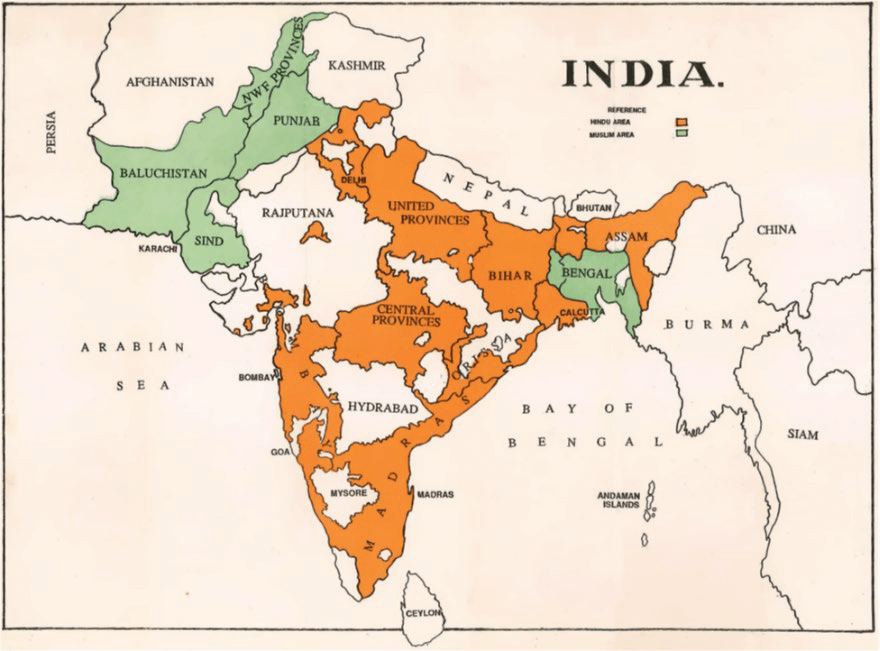
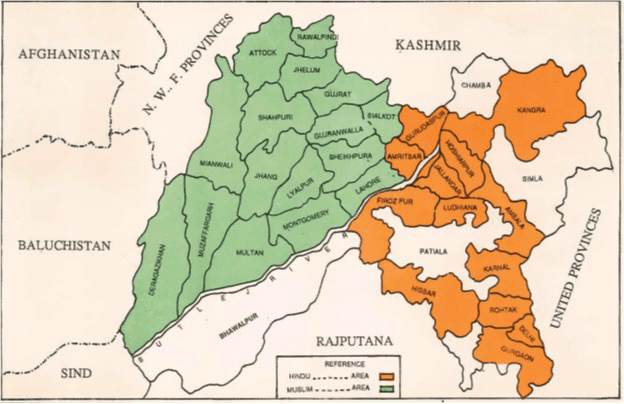
One of the most overlooked features of Thoughts on Pakistan is Ambedkar’s extensive use of cartography. The book did not merely discuss Pakistan in theoretical terms; it included demographic and territorial maps designed to illustrate how partition might be implemented in practice. Ambedkar recognized that constitutional arguments alone were insufficient. Any proposal for partition required a territorial framework showing where political boundaries could realistically be drawn.
Using district-level population data, Ambedkar demonstrated that Punjab and Bengal contained identifiable zones of Muslim, Hindu, and Sikh concentration. Because these populations were not uniformly distributed but clustered in contiguous districts, he argued that provincial partition was administratively feasible. The maps transformed the Pakistan debate from an abstract political demand into a concrete exercise in constitutional and territorial planning.
The importance of these maps extends beyond their immediate purpose within Thoughts on Pakistan. By visually identifying Muslim-majority and non-Muslim-majority districts, Ambedkar provided one of the earliest systematic blueprints for the possible division of Punjab and Bengal. His demographic analysis anticipated many of the territorial questions that would dominate British policy discussions during the final years of the Raj.
In 1942, Ambedkar entered the Viceroy’s Executive Council as Labour Member, becoming one of the highest-ranking Indian officials in the Government of India. From this position he gained direct exposure to wartime administrative planning and constitutional discussions concerning India’s future.
Some researchers have argued that Ambedkar’s demographic maps and constitutional reasoning influenced later British partition planning. They point to similarities between the territorial logic outlined in Thoughts on Pakistan and proposals that emerged during the closing years of British rule. In particular, attention has been drawn to discussions associated with Field Marshal Archibald Wavell, who became Viceroy in 1943 and explored various contingency plans for India’s future, including the possible partition of Punjab and Bengal.
Narendra Singh Sarila, in his study of British strategic planning during the transfer of power, reproduces maps showing potential partition arrangements that bear notable similarities to the demographic logic outlined by Ambedkar several years earlier. Comparable maps have also appeared in historical documentaries examining the end of British rule, including productions concerning the Viceroy’s House and the transfer of power.
According to this interpretation, Ambedkar’s work may have provided an early analytical framework for British officials considering the practical consequences of partition. His maps demonstrated that the division of Punjab and Bengal was not merely a political demand but a territorial problem that could be addressed through district-level boundary adjustments.
Whether Ambedkar’s maps directly influenced the final Radcliffe Boundary Commission remains a subject requiring further archival investigation. The available evidence clearly establishes that Ambedkar anticipated many of the territorial principles that later shaped the partition of Punjab and Bengal. His work remains one of the earliest and most detailed efforts to translate demographic realities into a workable scheme of political boundaries.
Viewed in this light, Ambedkar was not simply a commentator on Partition. He was among the first Indian constitutional thinkers to combine demographic statistics, electoral analysis, fiscal considerations, military planning, and cartographic evidence into a comprehensive blueprint for territorial reorganization. Long before 1947, he had outlined many of the geographical and constitutional issues that would ultimately determine the borders of India and Pakistan.
| Ambedkar | Constitutional-administrative analysis | Census data, fiscal geography, army structure, minority concentration | Political mobilization speed (he assumed slower implementation) | Predictions on refugees, Punjab violence, institutional chaos largely confirmed |
| Congress leadership | Territorial nationalism | Unity, democratic safeguards, national integration | Depth of communal insecurity in mixed districts | Failed to anticipate scale of displacement |
| Muslim League | Nationhood theory | Muslim political sovereignty, electoral safeguards | Administrative cost of creating new state institutions | Pakistan formed but faced severe early institutional strain |
| British planners | Negotiated transfer framework | Political settlement between major parties | Logistical preparation for mass migration and border violence | Withdrawal occurred with insufficient administrative transition planning |
Ambedkar’s Motivation revealed by Mohammad Ali Jinnah
During the minority rights meetings, the discourse of Muslims predominated all the available time. The time for Untouchables would be left out. Muslims were the largest minority group.
By creating Pakistan, Ambedkar was motivated in his scheme to drive Muslims out to Pakistan thereby leaving the Untouchable population in India as number 1 minority. This transfer of populations across the border will augment Ambedkar’s power as powerful leader of the Untouchables in India.
Ambedkar’s contribution and legacy can be summarized in 3 points
#1. He signed Poona pact with Gandhi’s a representative and making the Dalits in India a permanent minority/slavery for small financial benefits and never can overcome their status. By accepting small benefits, they have lost dignity.
#2. He has authored population exchange in Punjab and Bengal which was accepted by British and became the basis of what happened in 1947. Millions of people what displays may have millions lost their lives. He did not directly initiate killing but he never had any repentance over what happened due to his recommendations.
#3. He made Sikhs, Jains Buddhist Hindus according to article 25. Sikh representatives S. Bhupinder Singh Mann and S. Hukam Singh give a befitting argument against it but he never accepted it.
B.R. Ambedkar’s Boundary Maps of 1940
British-India map1940
Proposed Boundary Map of Punjab
Proposed Boundary Map of Bengal