Strategic Agrarian Resistance Before Gandhi
Dr. Gurinder Singh Grewal
March 22,2026
Punjab’s Canal Colony Agitation (1906–1907), Kisan Power, and the Limits of the 3.5% Rule
Abstract
The Punjab canal colony agitation of 1906–1907 was among colonial India’s earliest large-scale, organized, and nonviolent peasant mobilizations. Sparked by the Punjab Colonization of Land Bill (1906), settlers—mainly middle peasants—protested perceived threats to land, inheritance, and autonomy. Occurring over a decade before Gandhi’s rise, this movement challenges narratives that tie effective nonviolent mobilization solely to the Gandhian era.
This chapter contends that the Punjab case is a pivotal turning point in Indian kisan politics and compels a fundamental rethinking of theories of nonviolent resistance, particularly Chenoweth’s “3.5% rule.” It demonstrates that the commanding political-economic leverage of the peasantry—not merely their numbers—can decisively shape the trajectory of nonviolent movements. By fusing agrarian structure, economic indispensability, and regional centrality, the Punjab agitation establishes a powerful new framework for understanding both colonial resistance and the dynamics of modern collective action.
- Introduction: Rethinking the Origins of Mass Politics in India
The emergence of mass politics in India is often attributed to the leadership of Gandhi, whose campaigns in Champaran (1917), Kheda (1918), and the Non-Cooperation Movement (1920–22) are widely regarded as transformative. These movements are seen as the first instances of large sections of India’s rural population being mobilized into political action.
This view may disregard earlier organized resistance that featured mass participation, nonviolent methods, and strategic planning. The Punjab canal colony agitation of 1906–1907 is a particularly significant and underexamined example.
This chapter proposes three central arguments:
- Pre-Gandhian Mobilization: Punjab’s peasantry had already developed the capacity for large-scale, coordinated political action before Gandhi.
- Kisan Structural Power: The movement’s success derived from the strategic economic position of the peasantry within the colonial system.
- Theoretical Refinement: The case suggests that models of nonviolent success based solely on participation rates are inadequate and should be reformulated to emphasize the functional or strategic power exercised by key participant groups and locations.
- Colonial Punjab: Agrarian Engineering and State Power
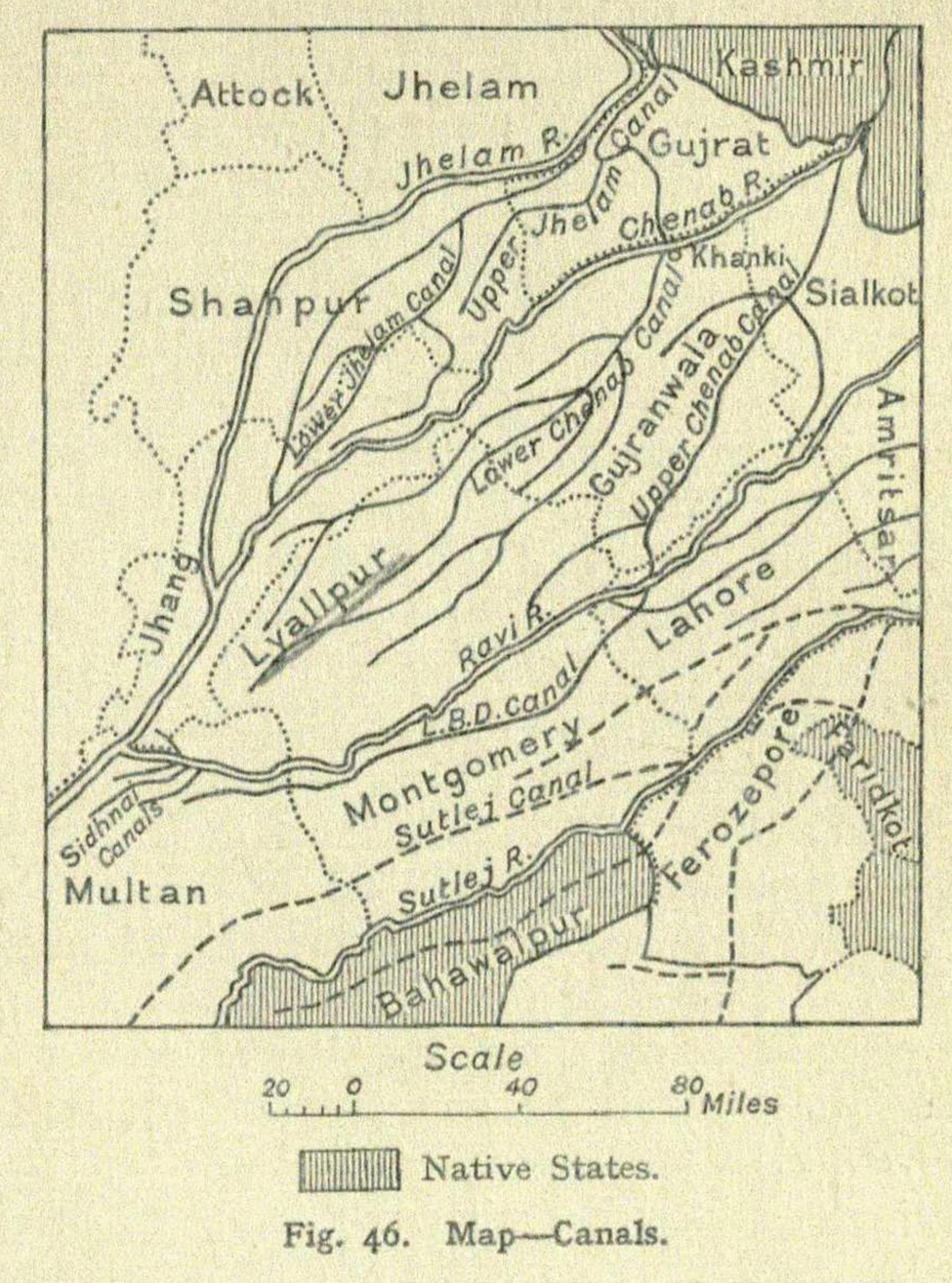
Following annexation in 1849, British administrators transformed Punjab into one of the most intensively managed agrarian regions in the empire. Central to this transformation was the creation of canal colonies—vast irrigation projects that converted arid lands into fertile agricultural zones.
The Chenab Colony (Lyallpur), established in the late nineteenth century, became the most prominent example. These colonies were:
- Highly productive
- Carefully planned and administered.
- Populated by selected “agricultural tribes.”
Yet, beneath this apparent success lay a system of controlled agrarian development. Land grants were conditional, and the state retained significant authority over:
- Ownership
- Inheritance
- Transfer
Thus, the colonial agrarian system combined economic modernization with administrative control, producing both prosperity and vulnerability.
III. The Punjab Colonization Bill (1906): Triggering Crisis
The Punjab Colonization of Land Bill (1906) intensified these tensions by seeking to formalize and expand state control over land.
Key Provisions:
- Restrictions on inheritance
- Reversion of land to the state
- Limits on transfer and sale
For canal colony settlers, these measures represented an existential threat.
Land was not merely property—it was identity, lineage, and honor.
The bill, therefore, triggered not only economic anxiety but also moral outrage, transforming discontent into collective resistance.
- The Rise of Kisan Consciousness
The agitation marked a shift in Punjab’s agrarian society from economic grievance to political consciousness.
Social Composition:
- Sikh Jat peasants
- Hindu cultivating castes
- Ex-soldier settlers
- Middle peasantry
These were not the poorest peasants, but rather organized, relatively prosperous, and self-aware agricultural actors.
Structural Features:
- Strong kinship networks
- Panchayat traditions
- Experience with state institutions
This enabled rapid mobilization without centralized party structures.
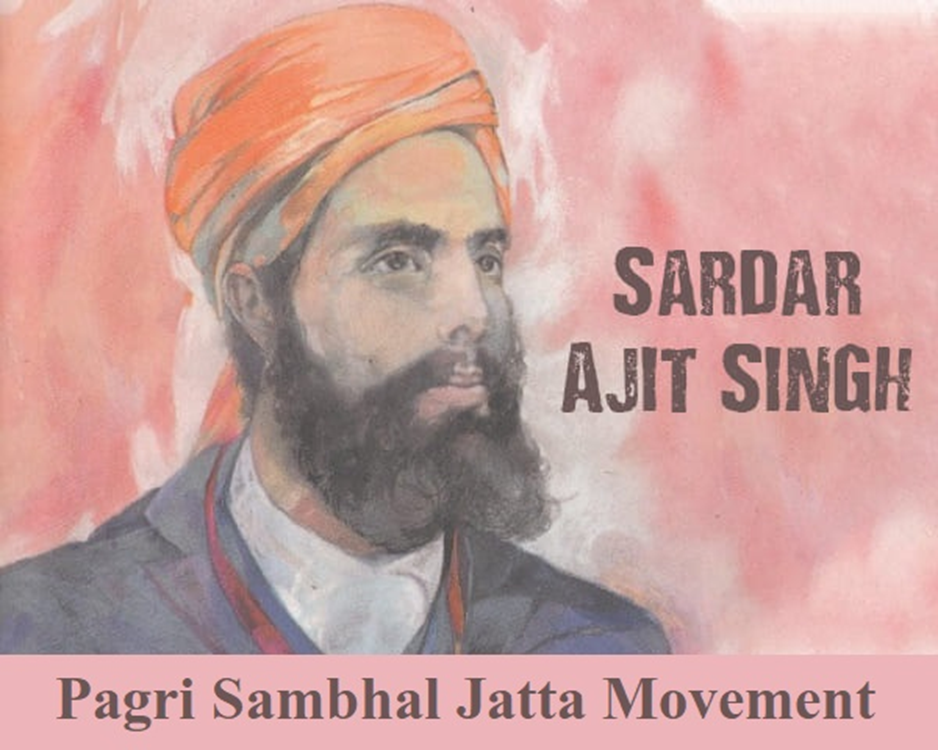
- “Pagri Sambhal Jatta”: Symbol and Strategy
The slogan “Pagri Sambhal Jatta” became the ideological core of the movement.
It represented:
- Defense of Honor (izzat)
- Protection of land
- Assertion of dignity
Leadership from figures such as Ajit Singh translated legal issues into accessible agrarian language.
Mobilization Techniques:
- Mass village meetings
- Vernacular poetry and songs
- Pamphlet circulation
- Informal networks
This built a shared moral and political narrative across rural Punjab.
- Nonviolence Before Gandhi: Structural, Not Ideological
A key insight of this chapter is that nonviolence in Punjab was not Gandhian in origin.
It emerged from:
- Fixed agrarian assets (land could not be abandoned)
- Desire for reform, not revolution
- Community discipline
- Awareness of state coercion
Thus, nonviolence was a strategic adaptation rather than a philosophical doctrine.
VII. Economic Centrality: The Source of Kisan Power
The canal colonies formed the economic backbone of Punjab:
- Major revenue contributors
- Grain-producing regions
- Linked to military recruitment
Disruption in these areas posed systemic risks.
Therefore:
The peasants’ power stemmed from their indispensability, not their numbers.
This is the central theoretical claim of your argument: strategic indispensability within the system, rather than the sheer number of participants, determined the actual power of the Punjab peasantry.
VIII. Colonial Constraints and Policy Retreat
The British response combined repression and accommodation:
- Arrests and deportations
- Surveillance
- Attempts at control
However, the state faced structural limits:
- Economic dependence
- Administrative overstretch
- Political risk of escalation
Ultimately, the government withdrew or modified the bill.
- Reinterpreting Chenoweth: Punjab as a Critical Case
Erica Chenoweth’s work suggests that movements succeed when they mobilize a critical mass (~3.5%).
Yet, Punjab complicates this rule.
It demonstrates:
- Participation was regionally concentrated.
- The percentage of the total population was likely small.
- Yet the impact was decisive.
Therefore:
Effective Power = Participation × Strategic Location
- Functional Threshold Theory
Punjab leads us to a refined model:
Instead of:
- Fixed numerical threshold (3.5%)
We propose:
- Functional threshold
Defined as:
The proportion of actors necessary to disrupt key systems of power
In Punjab:
- Canal किसानों = economic core
- Small numbers → large systemic impact
- Comparative Perspective
Compared to Gandhian movements:
| Timing | Pre-Gandhi | Post-1917 |
| Ideology | Agrarian | Moral-political |
| Scale | Regional | Broader |
| Strategy | Structural pressure | Moral + political |
Punjab shows that Gandhi scaled and systematized methods that were already emerging locally.
XII. Implications for Punjab’s Political Trajectory
The canal colony agitation set patterns that reappear in:
- Gurdwara Reform Movement
- Punjabi Suba movement
- Modern farmers’ protests
Key Continuity:
- Strategic concentration
- Agrarian base
- Moral + economic claims
XIII. Conclusion
The Punjab canal colony agitation of 1906–1907 stands as:
- A pre-Gandhian mass movement
- A kisan-led political transformation
- A theoretical challenge to numerical models of resistance
It demonstrates that:
Power in nonviolent movements derives not only from how many participate, but from where they stand within the system.
Punjab, therefore, provides a crucial corrective to both nationalist historiography and contemporary political theory.
Footnotes
- Imran Ali, The Punjab Under Imperialism (Princeton, 1988), 54–120.
- Ian Talbot, Punjab and the Raj (1988), 120–145.
- Erica Chenoweth and Maria Stephan, Why Civil Resistance Works (2011), 7–35.
- Khushwant Singh, A History of the Sikhs, Vol. 2, 169–172.
- Bipan Chandra et al., India’s Struggle for Independence, 79–83.
- David Gilmartin, Empire and Islam (1988), 45–60.
Attachments